

How to Tell If Shelving Is Durable: 7 Checks
Table of Contents
- Start With the Frame: Uprights, Beams and Bracing
- How to Read Shelving Weight Capacity and Safety Margins
- Shelf Material Durability: Steel, MDF, Particle Board and Wire
- Metal vs Plastic Shelving: Which Holds Up Longer?
- Spotting Shelf Sagging and Support Problems
- Coatings, Corrosion and the Storage Environment
- Your At-Home Inspection Checklist Before You Buy or Repair
- Conclusion: When to Repair and When to Replace Durable Shelving
- Frequently Asked Questions
Last Updated: October 19, 2026
Start With the Frame: Uprights, Beams and Bracing
Durable shelving starts with the frame, not the boards. If the uprights flex when you press them and the beams shift under light load, the unit will not last, no matter how good the shelf surfaces look.
This guide from StorageCentral covers how to tell if shelving is durable before you buy or repair it. We focus on the frame first because it carries every kilogram you stack on it.
Shelving durability is the ability of a unit to hold its rated load over years of use without bending, wobbling or failing at the joints.
Here is what separates a strong frame from a weak one:
- Uprights: Look for thick steel with no dents. Thin uprights twist and buckle under load.
- Beams: These should slot in firmly with no side-to-side play.
- Bracing and crossbars: Diagonal or horizontal bracing stops the frame from racking sideways.
- Fasteners and connections: Bolts should sit tight. Boltless tabs should lock without force.
- Welds: Clean, continuous welds hold. Sparse spot welds crack over time.
A common mistake is judging a rack by its shelf boards. The frame does the heavy lifting. Check it first.
How to Read Shelving Weight Capacity and Safety Margins
Read a capacity rating as a ceiling, not a target. A shelf rated to a set weight is tested under even distribution, and real loads rarely spread evenly.
Weight capacity is the maximum load a shelf or unit can hold safely. It usually appears as capacity per shelf and total unit capacity.

Distributed Load vs Point Load
Distributed load spreads weight across the whole shelf. Point load concentrates weight in one spot, like a toolbox or a single heavy crate.
Point loads are the quiet killer. A shelf rated for a high distributed load can still sag if you drop a heavy item in the middle. Keep heavy items over the uprights and spread weight out.
Shelf Material Durability: Steel, MDF, Particle Board and Wire
Material choice decides how a shelf ages, and the same board can be perfectly durable in one room and fail within a season in another. The useful question is not 'which material is strongest' but 'which material holds its rating in this environment, under this load type'.
Here is how the common shelf materials actually behave.
- Steel: Highest strength-to-thickness ratio of the common options. Powder-coated or epoxy-coated steel resists rust in garages and workshops, and it bends before it breaks, which gives a visible warning. Bare or scratched steel rusts quickly in damp air, and thin-gauge steel can dent permanently under a point load.
- MDF: Dense, smooth and stable in dry indoor air, with good screw-holding at the edges. Its weakness is moisture: MDF swells when wet and does not return to its original thickness, so a single spill or a damp garage can ruin a shelf. It also sags under sustained point loads more than plywood of the same thickness.
- Particle board: Cheaper and lighter than MDF, but weaker at the edges and more prone to moisture damage. Edge chip-out is common, and once water reaches the core the board crumbles. It suits light, dry storage only.
- Plywood: More moisture-tolerant than MDF or particle board because of its crossed veneer layers, and it holds fasteners better at the edges. It is heavier and more expensive, but it resists sagging and delamination better under load.
- Wire shelving: Open construction lets air circulate, which suits damp spots and prevents moisture trapping. The trade-off is that small items fall through the gaps and point loads concentrate on individual wires, so wire is best for ventilated, evenly distributed storage rather than heavy single items.
Matching Material to Environment
- Garage or shed (humid, temperature swings): Coated steel frame with steel or plywood shelves. Avoid MDF and particle board unless the room is sealed and dry.
- Kitchen or bathroom (steam, spills): Coated steel or wire, wiped dry promptly. Timber boards need a sealed finish and quick cleanup.
- Bedroom or living area (dry, light loads): MDF and particle board are fine if kept dry and loaded evenly.
- Outdoor or open carport: Only coated, rust-resistant steel belongs here; timber and board products will not last.
A common pattern is that buyers match the material to the look of the room rather than the moisture and load it will actually face. Check the environment first, then pick the material that survives it.

Metal vs Plastic Shelving: Which Holds Up Longer?
Metal shelving outlasts plastic in almost every loaded or outdoor setting. Plastic suits light, dry storage, but it cracks under heavy loads and ages in sunlight.
Metal wins on strength, load capacity and heat resistance. Plastic wins on price, weight and rust immunity.
The catch: cheap plastic shelving flexes and yellows. It also fails suddenly, without warning. Metal bends first, which gives you a sign before it gives way.
If you need shelving that takes knocks from kids or tools, go metal. If it is a light utility shelf in a dry laundry, plastic can do the job.
Spotting Shelf Sagging and Support Problems
Sagging is the clearest sign a shelf is failing, but the useful skill is catching deflection before it becomes permanent. A bowed board, a dipping beam or a rack that leans all point to the same problem: the load has beaten the support. Once a board bows and stays bowed, tightening bolts will not bring it back.
Check these signs regularly:
- A visible dip in the middle of a shelf
- Beams that no longer sit level
- A frame that wobbles when nudged
- Boards that creak or shift under load
- Gaps opening at joints or connections
- A rack that leans away from the wall or sits off its feet
Safe, Measurable Checks You Can Run Today
These checks are designed to assess condition without encouraging risky overload testing. Never stand on a shelf or add weight beyond the rated capacity to 'test' it.
Giantz 1.8m Garage Shelving Rack, Black →
The straight-edge test: Lay a straight edge or spirit level along each shelf, front to back and side to side. Any gap under the middle means the board is deflecting. Note where the gap is largest; midpoint deflection under a point load is the usual starting point of failure.
The wobble test: Give the frame a firm nudge at waist height. A solid unit stays put. A loose one rocks, which means the bracing or fasteners need attention. Rocking that continues after you tighten fasteners points to a bent frame or uneven floor.
The floor-contact check: Look at each foot or base plate. A foot that sits off the floor means the unit is bridging, which loads the frame unevenly and accelerates joint wear. Shim it level before loading.
The joint-gap check: Run a finger or a torch along beam-to-upright connections. New gaps, shiny wear marks or loose tabs mean the connection is moving under load.
The plumb check: Hold a spirit level against an upright. A frame that leans, even slightly, is carrying load off-centre and should be unloaded and corrected before reuse.
When Sagging Means Stop
A slight, even deflection that returns when the load is removed is normal for many board shelves. Deflection that stays after unloading, a visible bow, a cracked weld or a beam that no longer locks means the unit should be unloaded and taken out of service until repaired or replaced. Do not keep loading a shelf that has already yielded; the next failure is sudden.
Coatings, Corrosion and the Storage Environment
Coatings decide how long metal shelving survives moisture. A good powder-coated or epoxy finish keeps rust out, but scratches and damp air speed up corrosion.
Where you store a rack matters as much as what it is made of:
- Garages and sheds: Humid and prone to damp. Choose coated steel and keep it off bare concrete.
- Kitchens and bathrooms: Steam and spills attack bare metal. Wipe down and dry promptly.
- Outdoor or open carports: Only coated, rust-resistant units belong here.
Inspect the surface finish each season. Touch up chips early. A small scratch left alone becomes a rust patch, and rust weakens the frame where it matters most.
Your At-Home Inspection Checklist Before You Buy or Repair
Use this checklist to judge durability before you spend money. It works for a rack you already own and one you are about to buy.
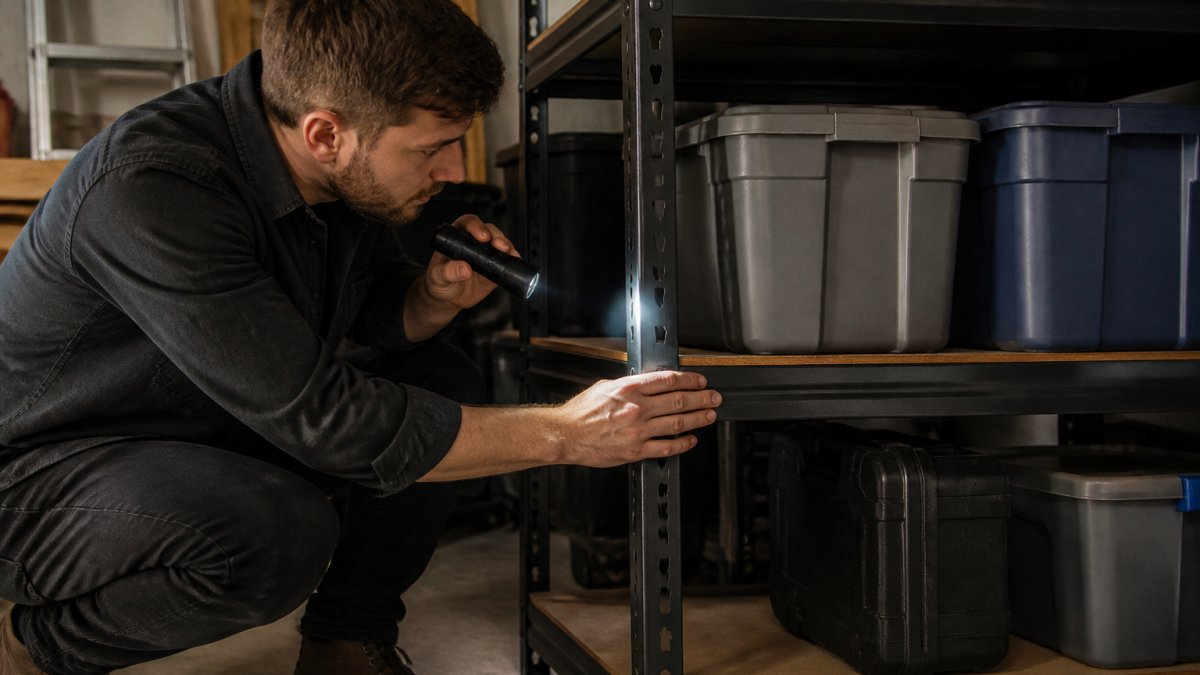
- Press each upright. It should not flex or twist.
- Nudge the frame. No wobble, no rocking.
- Check beams for play and confirm they lock in place.
- Look for clean welds and tight fasteners.
- Run a straight edge along each shelf for sag.
- Inspect the coating for chips, rust or bare metal.
- Confirm the capacity rating suits your heaviest load.
- Match the material to the room's moisture levels.
If you are buying new, check the rating and the frame before anything else. A unit like our Giantz 1.8m garage shelving rack shows what to look for: high-grade steel, a powder-coated finish, adjustable beams and a stated capacity per tier. That is the kind of detail a durable rack should list up front.

Conclusion: When to Repair and When to Replace Durable Shelving
Repair makes sense for loose fasteners, a single chipped coating or a wobbly joint you can tighten. Replace the unit when the frame is bent, welds are cracked or a shelf has bowed and stays bowed.
The line is simple: fix what is loose, replace what is deformed. Bent steel and sagging boards do not recover, and a repaired frame that has already failed once is a risk.
At StorageCentral, we build our range around frames and materials that hold their shape under real loads. Browse our workshop and garage shelving to find a unit rated for the weight you actually store, and check the frame before you trust the shelf.
Frequently Asked Questions
Are floating shelves supposed to be wobbly?
No. A correctly installed floating shelf should feel solid when you press down on the front edge. Slight flex under heavy load is normal, but side-to-side movement or a visible gap at the wall means the fixings are loose or the anchors are wrong for your wall type. Check that the bracket is screwed into studs or masonry, not just plasterboard, and re-tighten or replace the anchors before loading the shelf again.
How do you check a shelf's weight capacity?
Look for a stated capacity per shelf and a total unit capacity on the box or listing, then compare it to what you plan to store. Weigh a few typical items on bathroom scales and multiply. Keep the load evenly spread, because a 200kg per-tier rating assumes weight is distributed across the board, not stacked in one corner. If no rating is printed anywhere, treat the shelf as light-duty only.
Is metal or plastic shelving better for a garage?
Metal wins for load and longevity in most garages. Powder-coated steel resists rust and holds far more weight per shelf than moulded plastic, which can crack in cold weather and bow under sustained load. Plastic suits damp spots and light items because it will not rust. For heavy toolboxes, paint tins or long-term storage, choose steel with a powder-coated finish and a stated per-tier capacity.
How wide can a shelf be without support?
It depends on the material and thickness, but as a rule, MDF or particle board boards beyond about 90cm need a middle supporting beam to avoid sagging over time. Steel shelves handle longer spans because the beam carries the load. If you are spanning a wide gap, add a centre upright or crossbar rather than trusting the board alone, and check the shelf for a bow after a few weeks of loaded use.